


One of the most common degenerative dystrophic diseases today is coxarthrosis, also known as coxarthrosis.The disease can affect one or both joints, but these processes occur gradually.In the initial stages of the disease, one joint is affected, and later, a second joint is affected.
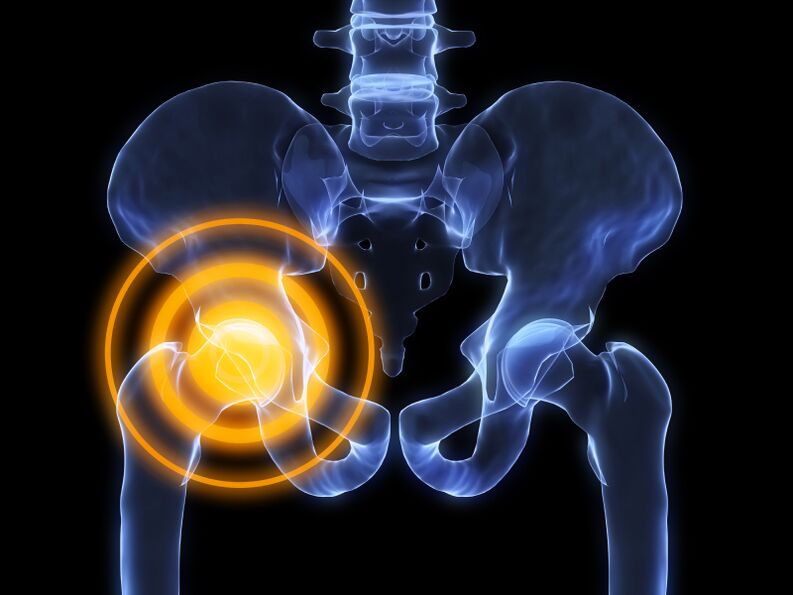
Most often, patients over the age of 40-45 suffer from hip joint disease, but this disease has several causes and, in principle, it can occur in people of different ages.Fortunately, arthritis of the hip joint is uncommon in children.Congenital hip dysplasia can lead to hip arthropathy in children.The cause is underdevelopment of the bone tissue and ligaments of the joint.Children born with this condition often experience hip subluxation and dislocation when the head of the femur pulls out of the socket.
Description and causes of disease
The hip joint is between the ilium and femur.This is why the inflammation and pathology of the sacroiliac joints of the hip is called arthropathy.
The space between them also contains synovial membrane and hyaline cartilage, all of which components work together to ensure the normal function of the joint.All of this is clearly visible in the photo of the hip joint.
The job of hyaline cartilage is similar to that of a sponge.When it contracts, it releases the required amount of lubricating fluid, depending on the load on the joint.After loading ceases, the cartilage pores fill with fluid again.One of the causes of diseases such as the hip joint is changes in the properties of synovial fluid.
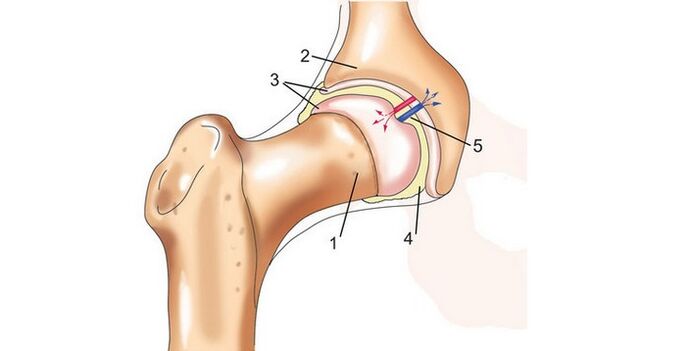
In addition to the role of hyaline cartilage, the cause of hip arthritis may also be due to poor blood circulation that slows down metabolic processes in the joint.These processes cause the muscles around the joints to atrophy.These muscles play a protective role in the joints during the normal functioning of all mechanisms and processes.They reduce the risk of injury if you accidentally move, fall or jump.
The disease can also occur as a result of injuries, inflammatory processes and infections that occur in the body and as a consequence of congenital dislocation of the hip or congenital joint development disorders (dysplasia).
Degree and symptoms of joint disease
There are four levels of this disease:
- 1st degree hip arthritis.At this stage of the disease, patients may experience some discomfort, especially after physical exertion and walking up and down stairs.The first degree of hip pain can occur in the hip and knee areas.
- Hip articulation 2 degrees.This degree of the disease is characterized by more intense pain.In addition to physical activity, pain may occur even when the leg is resting; there may even be a limp if walking for long periods of time.The pain is distinct in nature and can radiate to the groin, back, or knees.With this level of arthrosis, the function of the joints has been impaired.
- Third degree hip pain persists and doesn't stop even at night.The patient can only move with the help of an orthotic device (cane or crutches).The movement of the joints is severely restricted.
- Fourth degree hip arthropathy presents with massive bone growth (visible on X-rays), severe pain, and pain that keeps getting worse.This degree of arthropathy is also called overt.Joint function is completely impaired, and movement is limited or impossible.It can only be treated with surgery.
Symptoms of hip arthritis vary depending on the extent of the disease:
- Lameness, impaired mobility of the legs in the hip area;
- stiffness of movement after exercise and at rest;
- Thigh muscle atrophy and shortening of the affected limb.
The main symptom that warrants a trip to the doctor is pain.Here, timely travel to the hospital plays a special role, since most patients develop symptoms already during the second or even third active progression of the disease.You should not wait until pain becomes apparent, as this is fraught with irreversible processes that may be occurring in your body.
Diagnosis of disease
This disease requires a comprehensive diagnosis.In the first phase, doctors talk with the patient to identify complaints of pain and other factors that contribute to anxiety.The patient is then examined to identify gait disturbances, length differences between healthy and diseased limbs, and pain on palpation.In addition, the affected area is checked for reduced sensitivity and a process to determine the function of adjacent joints is performed.At this stage of diagnosis, the doctor can make a presumptive diagnosis: The hip is in one stage or another.
After the conversation and exam, it was time for lab and instrument work:
- First, the patient is sent for an X-ray.Plain films and axial X-rays give doctors the opportunity to see an almost complete picture of the disease.
- If X-rays are not enough, the patient will be sent for an MRI or computed tomography scan.
- The essence of laboratory research is to identify inflammatory processes in the body through blood tests and to collect synovial fluid through punctures.Using the latter, you can observe whether the composition of a given liquid changes, as these changes are often the cause of hip joint disease.
hip treatment
Treatment of hip arthrosis and its diagnosis should be combined.There is a school of thought that the only sure way to eliminate hip joints is surgery.But often, surgery may be extremely undesirable or impossible due to some personal reasons, such as general health or advanced age.In this case, other methods of treating hip arthrosis should be used.Here everything depends not only on the condition of the patient, but also on the stage of the disease.
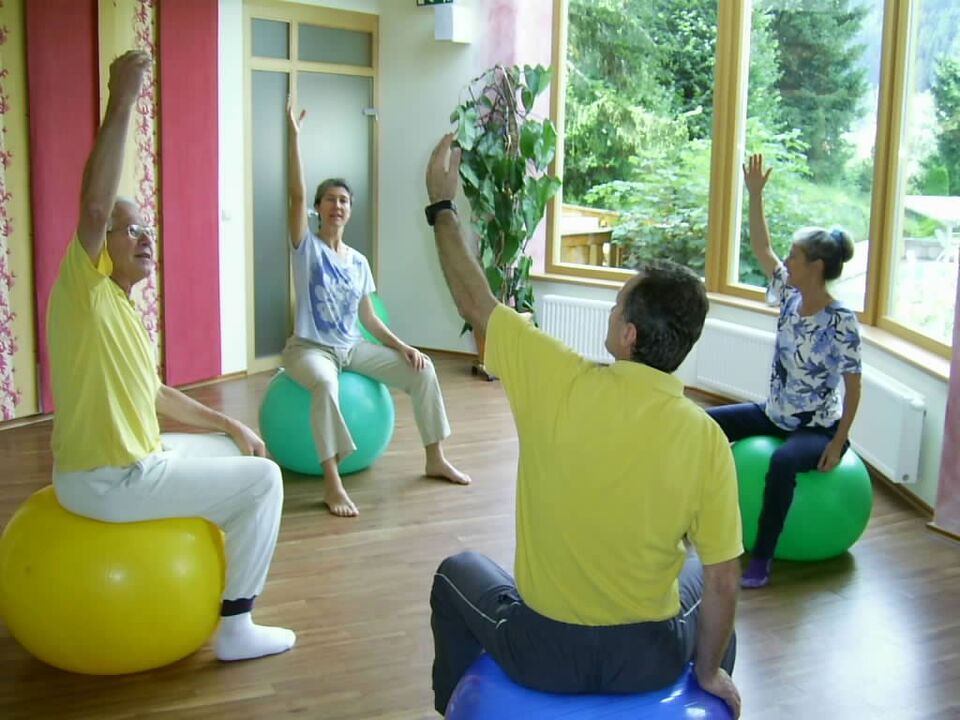
Level 1 joints heal completely without surgery.Of course, this treatment is complex and requires a lot of effort, and the patient must work hard to recover.Many surgeries performed for hip joint disease include:
- Medication to relieve inflammation, reduce pain, and improve metabolism in the joint area;
- Patients must regularly perform special exercises prescribed by their doctor;
- Diet in first-degree hip arthritis also plays an important role, since blood circulation and metabolic processes in the body, especially in the hip joint area, are particularly dependent on proper nutrition.
In the second degree of the disease we cannot talk about a complete recovery, since the bones have already been deformed, but, with the help of a series of specific procedures, surgery can be postponed for a longer period of time or avoided entirely.Second-degree hip joints require hospitalization 1-2 times a year, in addition to the same medication regimen of painkillers and anti-inflammatories, a set of exercises, and a special diet.
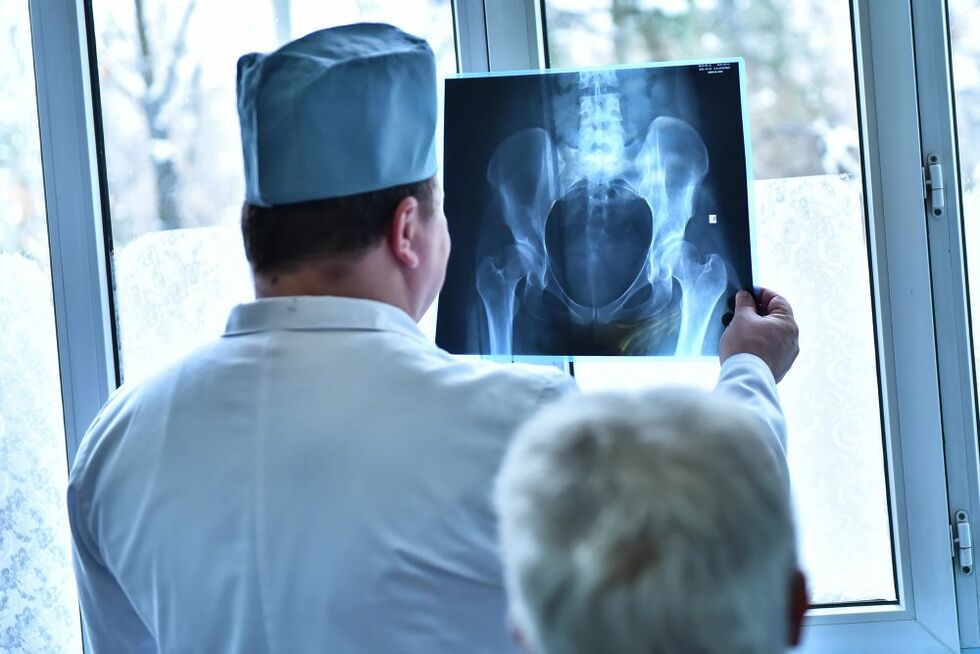
The third stage of arthrosis requires surgery.There is severe loss of joint tissue, deformation of the joint area is irreversible, and there may be no other way out.However, there are some particularly stubborn patients who, through incredible effort and constant self-effort, achieve significant improvement without surgical intervention.
Dietary and folk remedies for hip joint disease
As mentioned above, an important part of treating your hip joint is diet.The diet of a patient with hip arthritis must be balanced and contain all the necessary trace elements.The basis of any tissue in the human body is protein, so you need to eat dairy products and beans, as well as jellies and aspics that are not high in fat.It is necessary to take into account the fact that the goal of the diet, in addition to filling the body with necessary trace elements, is also weight loss.This is necessary to reduce the load on the joints.Based on this, the intake of high-calorie foods such as fat and salty foods should be reduced.
Treating hip arthritis with folk remedies can relieve pain and reduce some of the adverse processes associated with this disease.However, any formulation of traditional medicine must be approved by a doctor before use and can be used only with his approval.Here are some ways to treat hip joint disease:
- Cut a cabbage leaf with a knife, smear it with honey and leave it on the sore joint overnight, wrapping it with cellophane and a woolen bandage.
- Rub the joints with tincture of celandine in olive oil.To prepare, pour 7-8 tablespoons of plant stems in a liter of oil and leave for two weeks.
- Mix aloe vera juice with eucalyptus and mint leaves and apply this combination to sore joints several times a day.
- It is also common to use salt to treat hip arthritis because dry heat has beneficial effects on eliminating inflammation and pain.Pour the salt that has been preheated in a frying pan or oven into a bag made of thick cloth and apply it to the sore area.